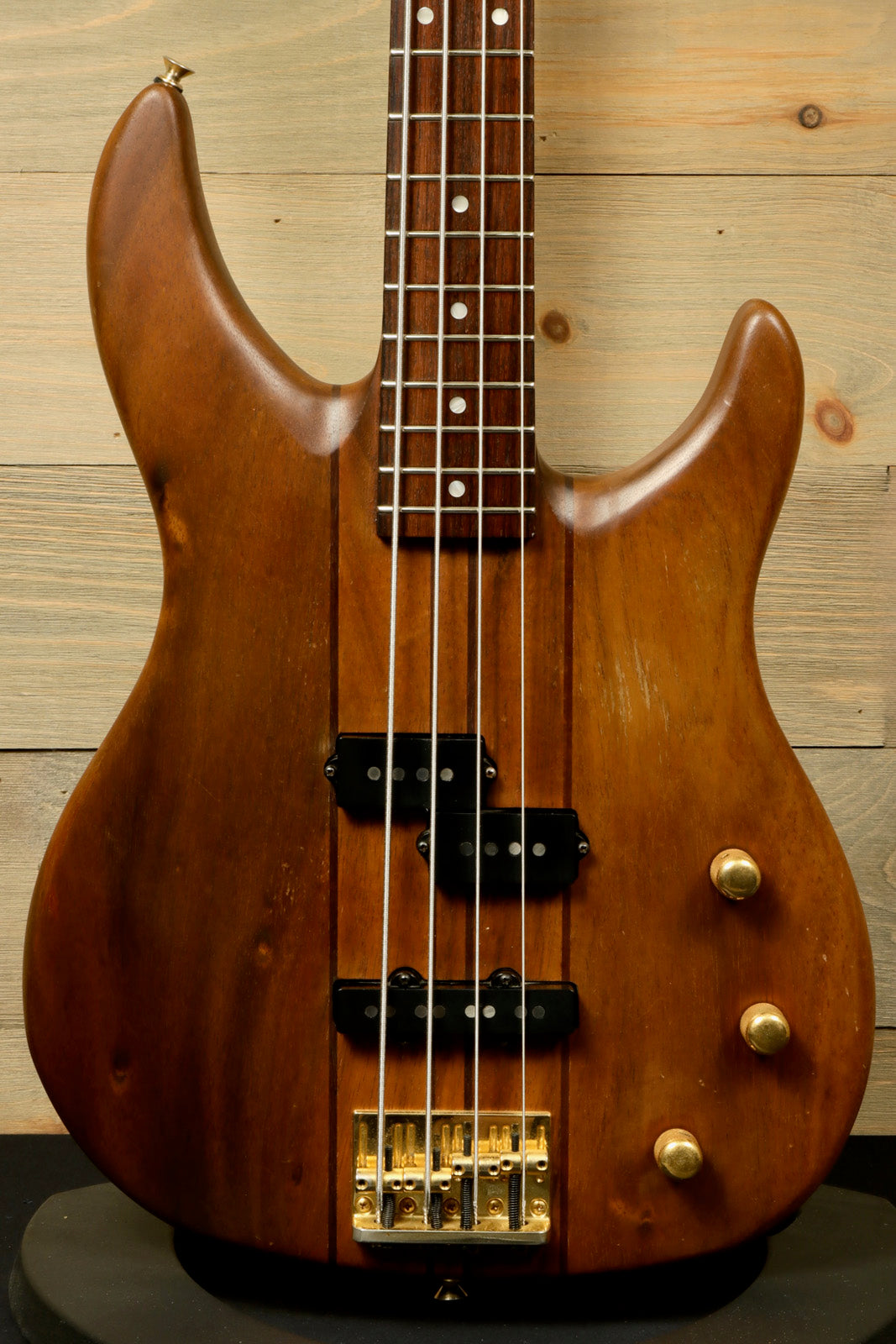
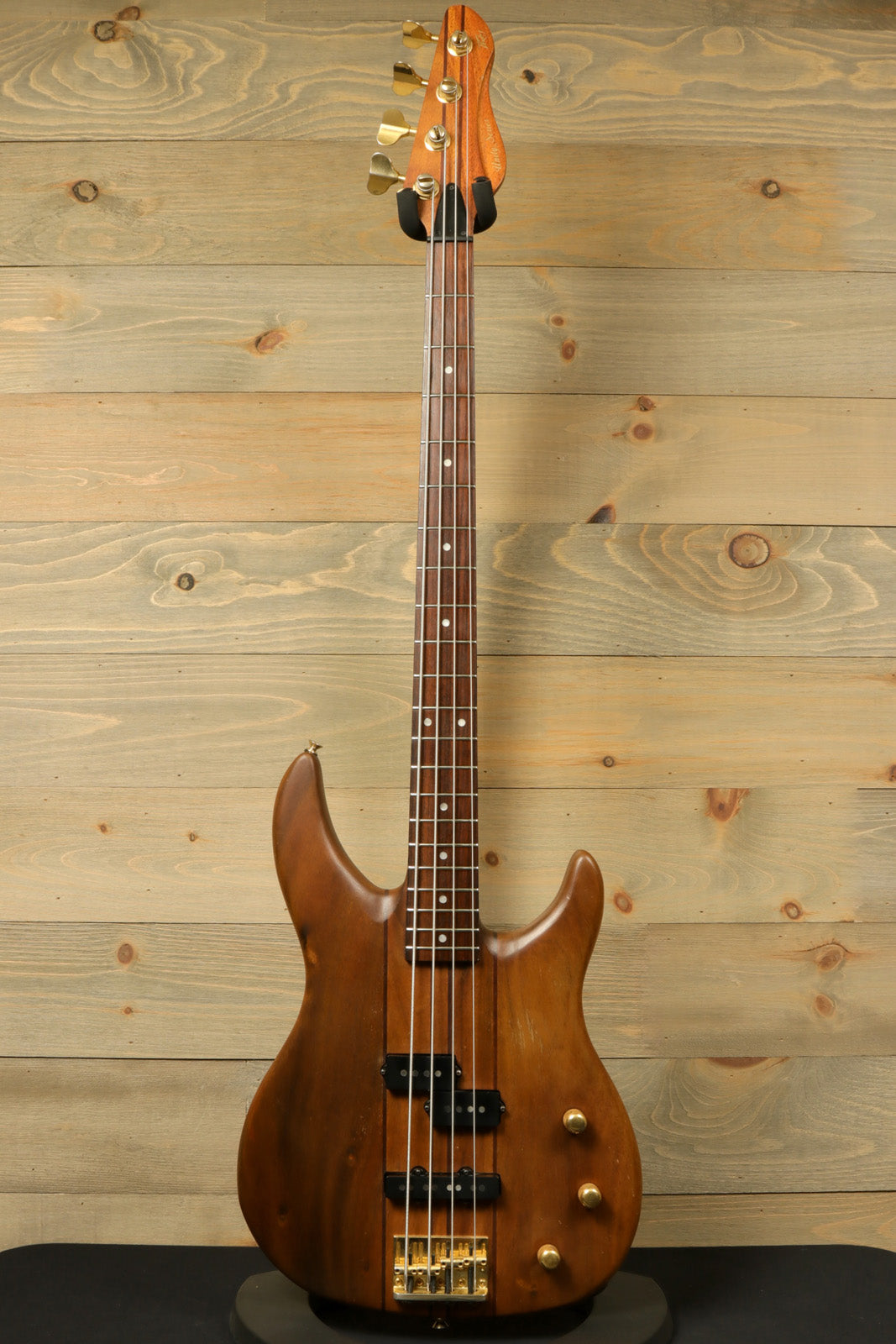
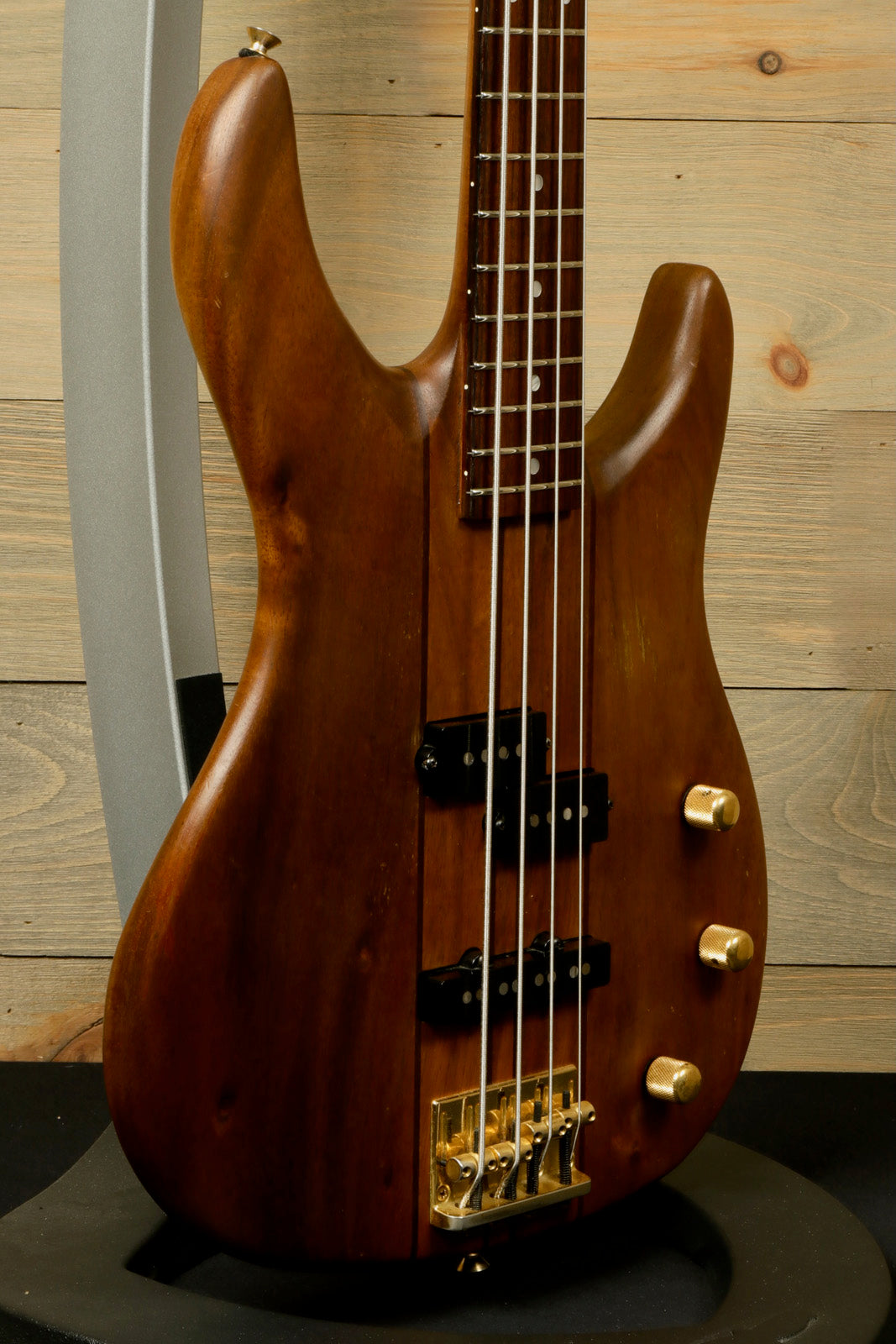
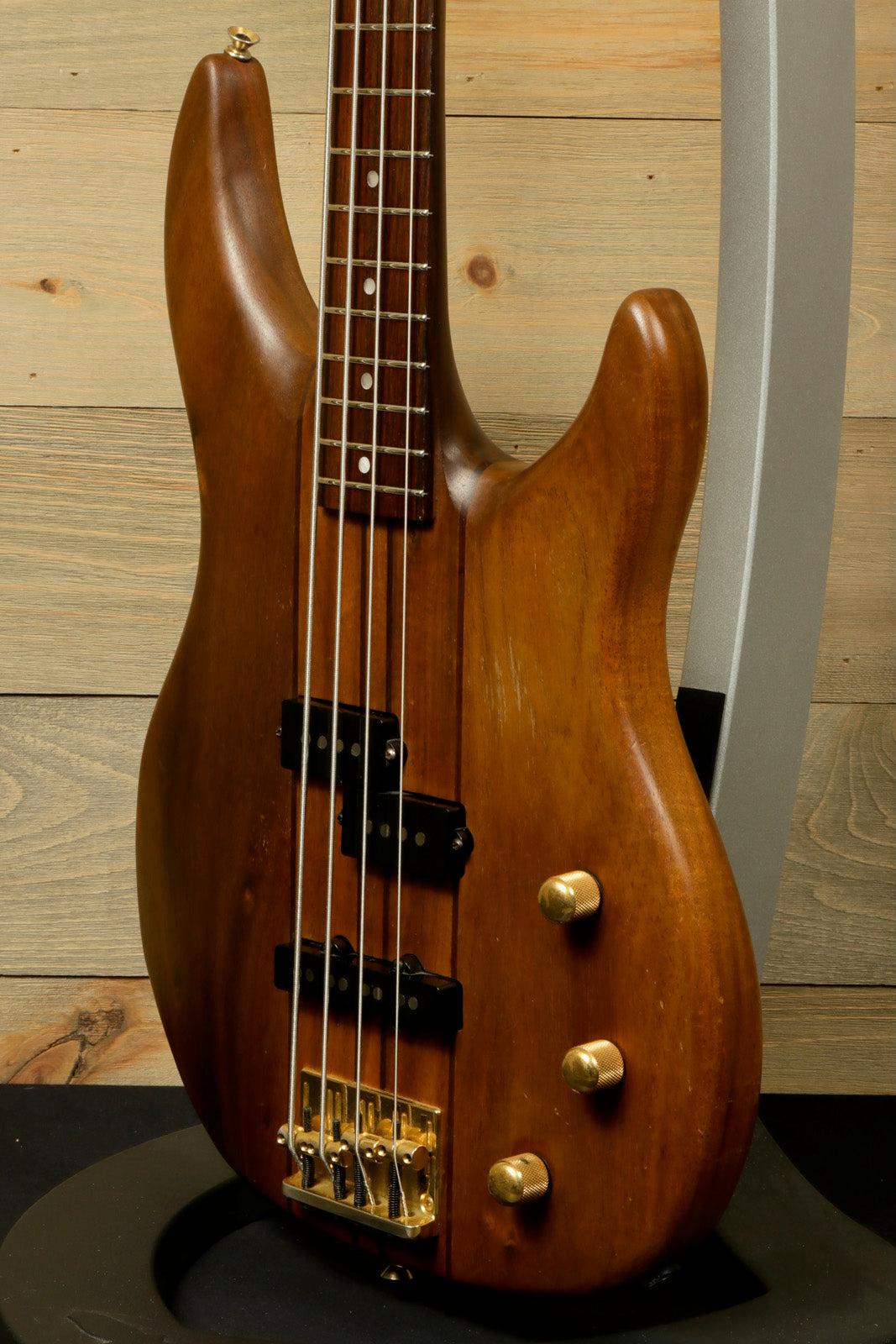
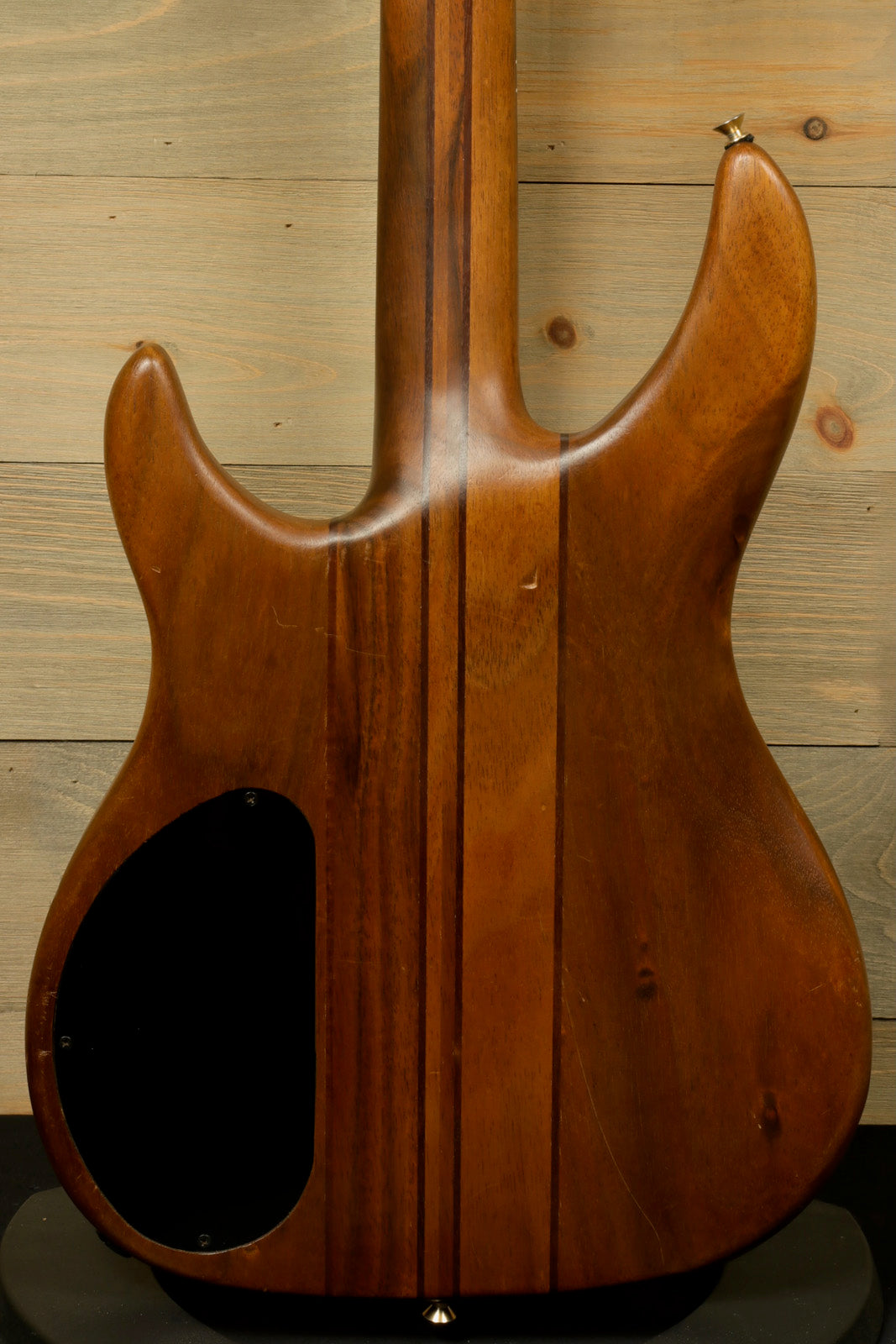
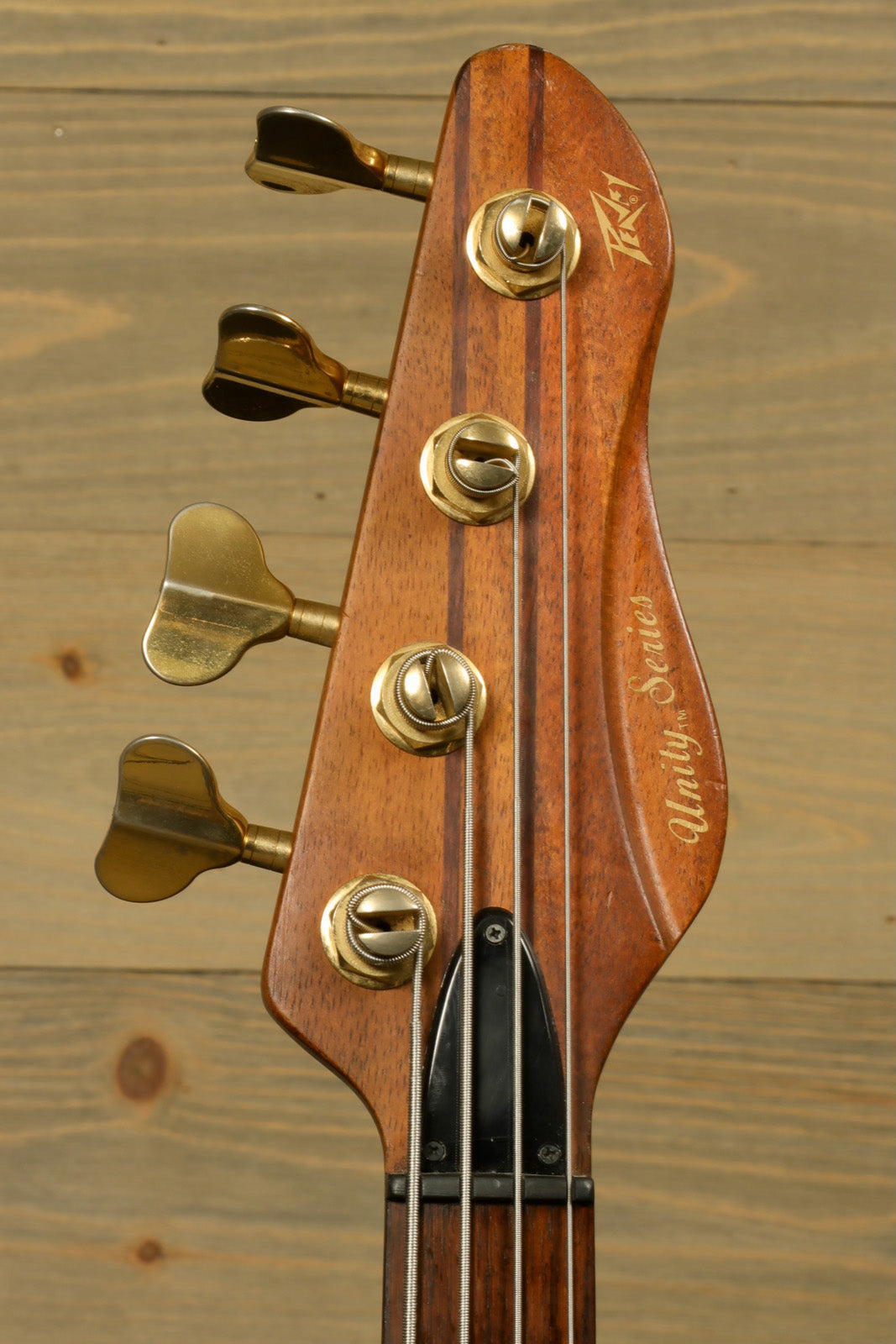
The Peavey Unity Series Koa Passive Bass is a highly regarded, USA-made instrument from the late 1980s and early 1990s. It is often celebrated for its "boutique-level" construction at a production price point.
Key Specifications & Features
The "Koa" version was a premium upgrade from the standard Unity series, which typically used poplar.
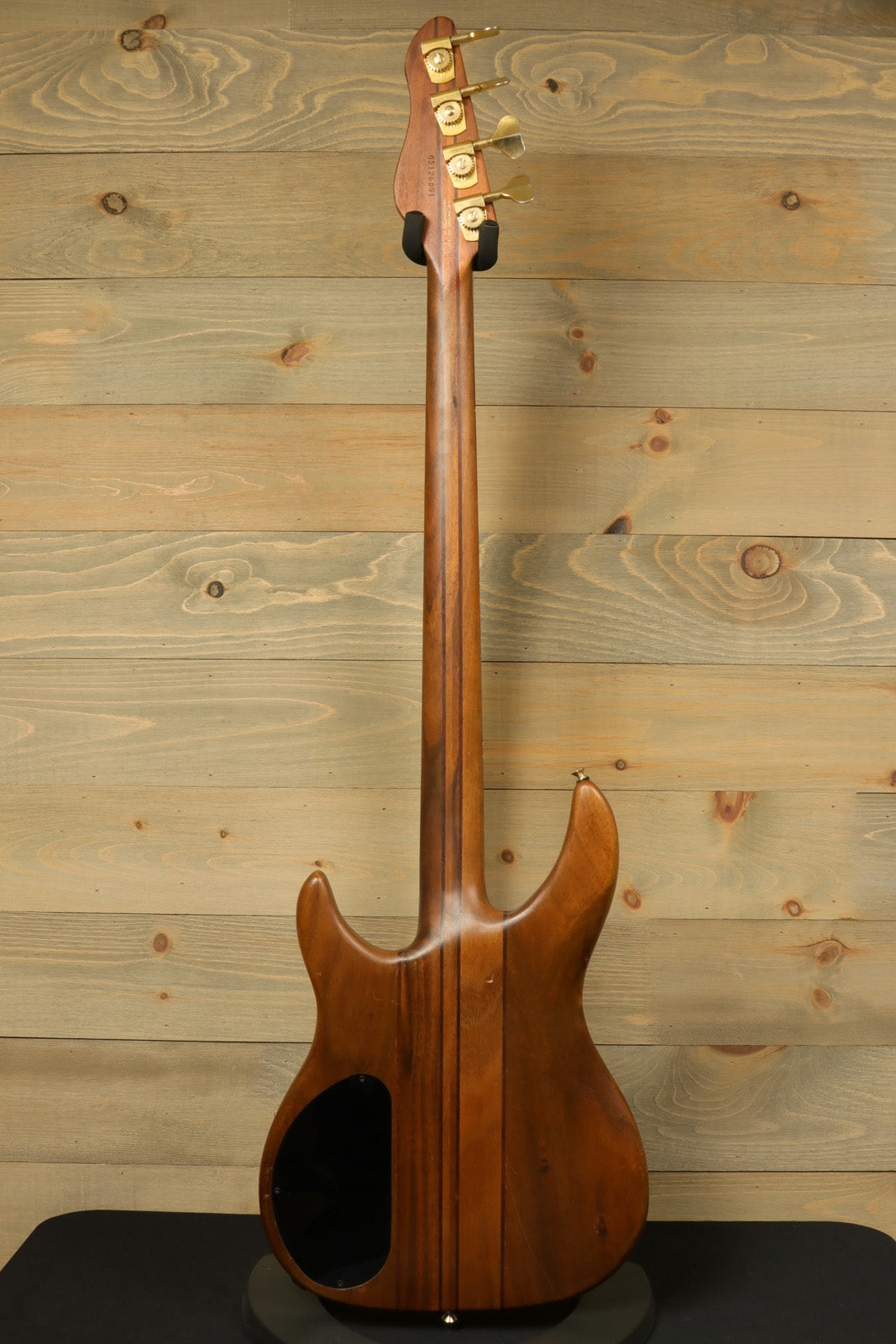
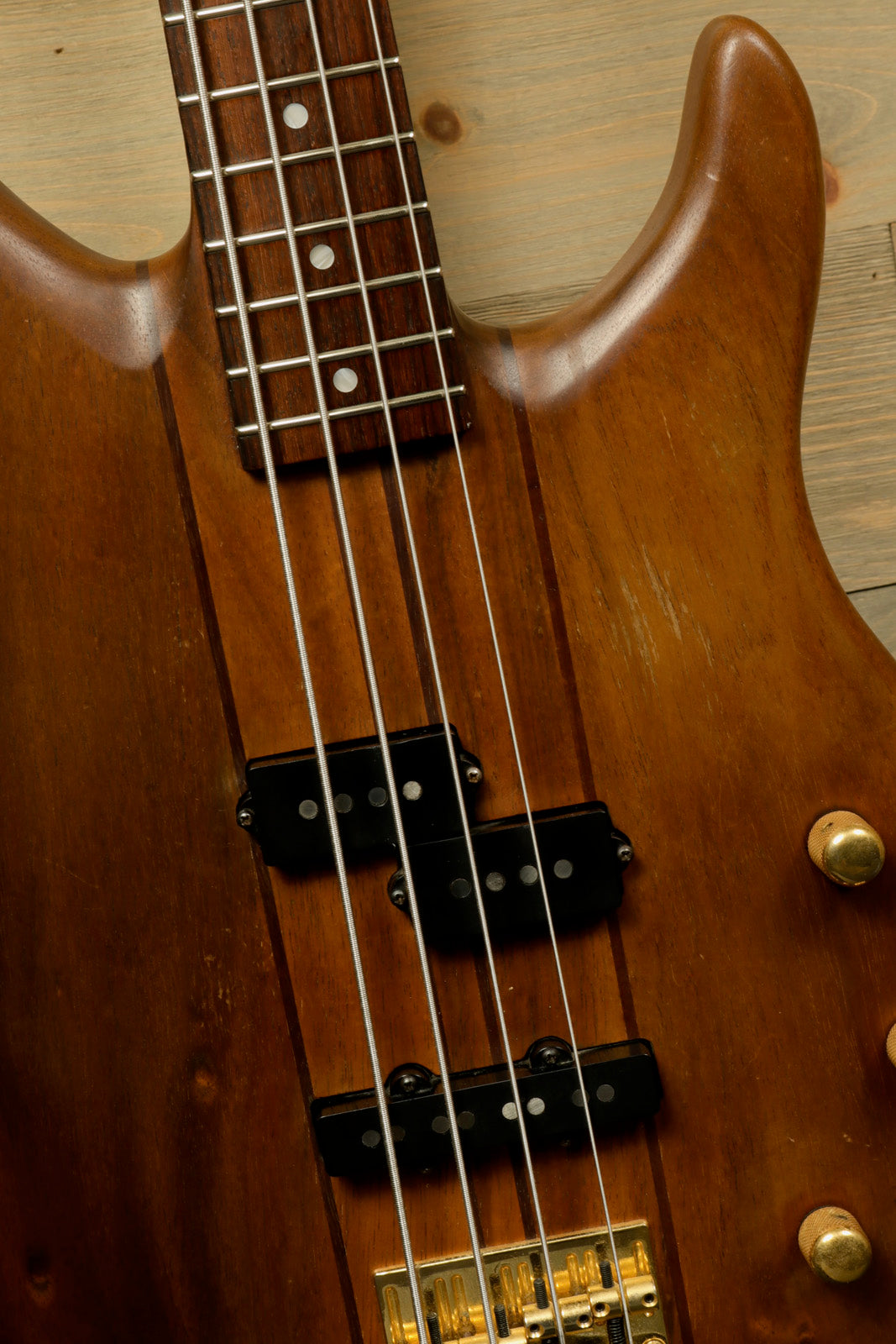
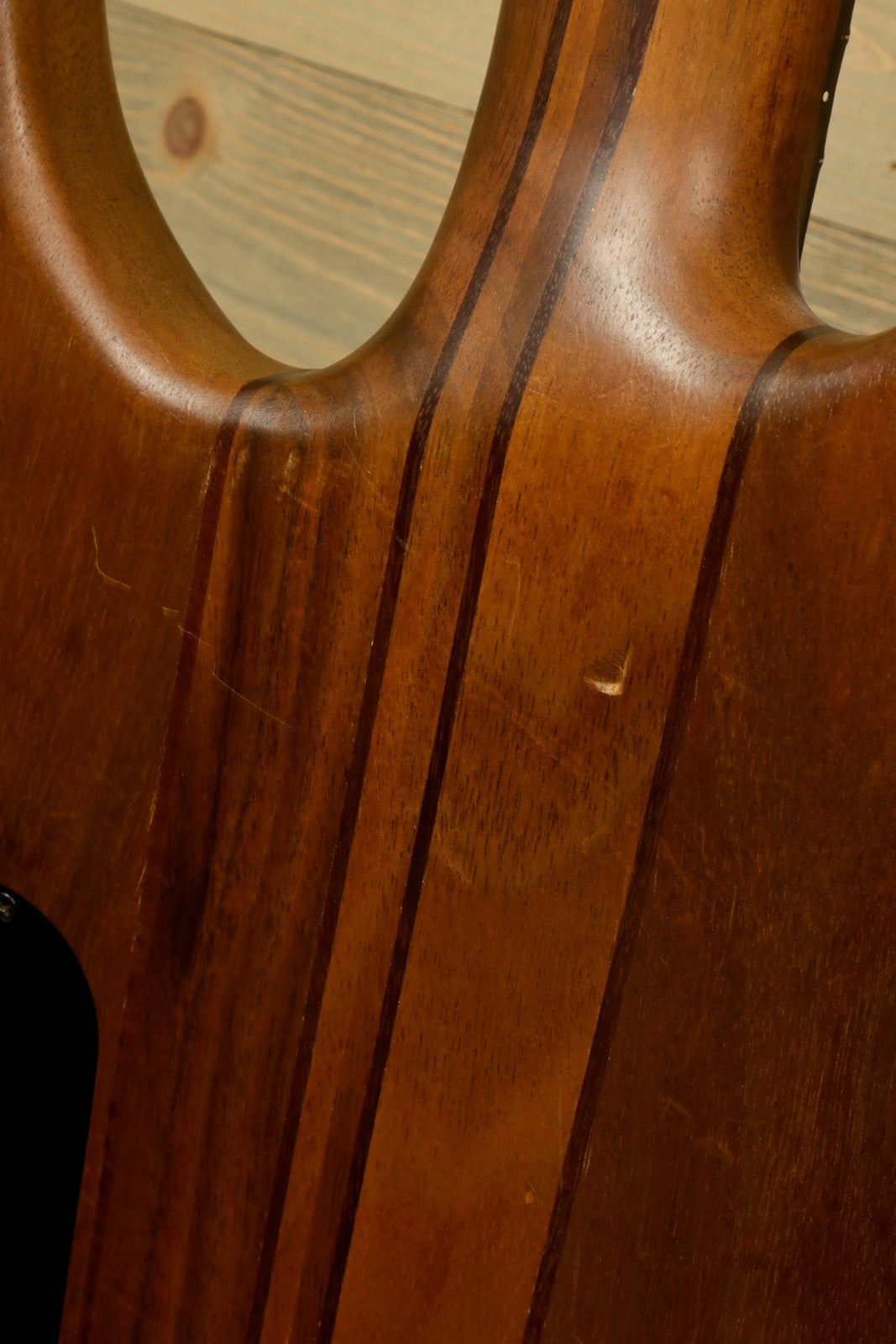
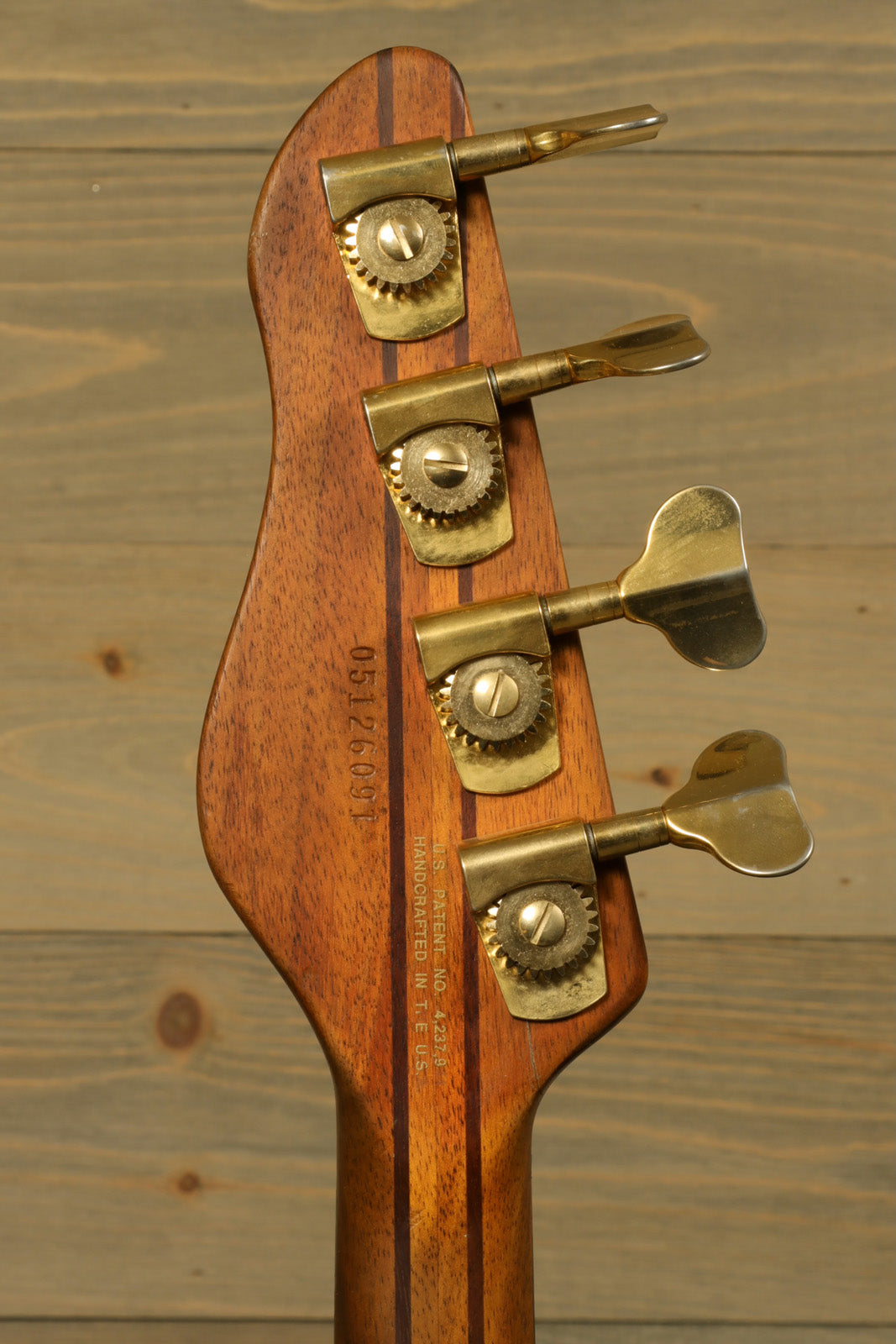
Construction: The bass features a neck-through-body design, utilizing a bilaminated Koa neck with distinctive Purpleheart stripes for added stability and aesthetics.
Finish: Unlike the painted standard models, the Koa version usually came with a hand-rubbed oil finish to showcase the wood grain.
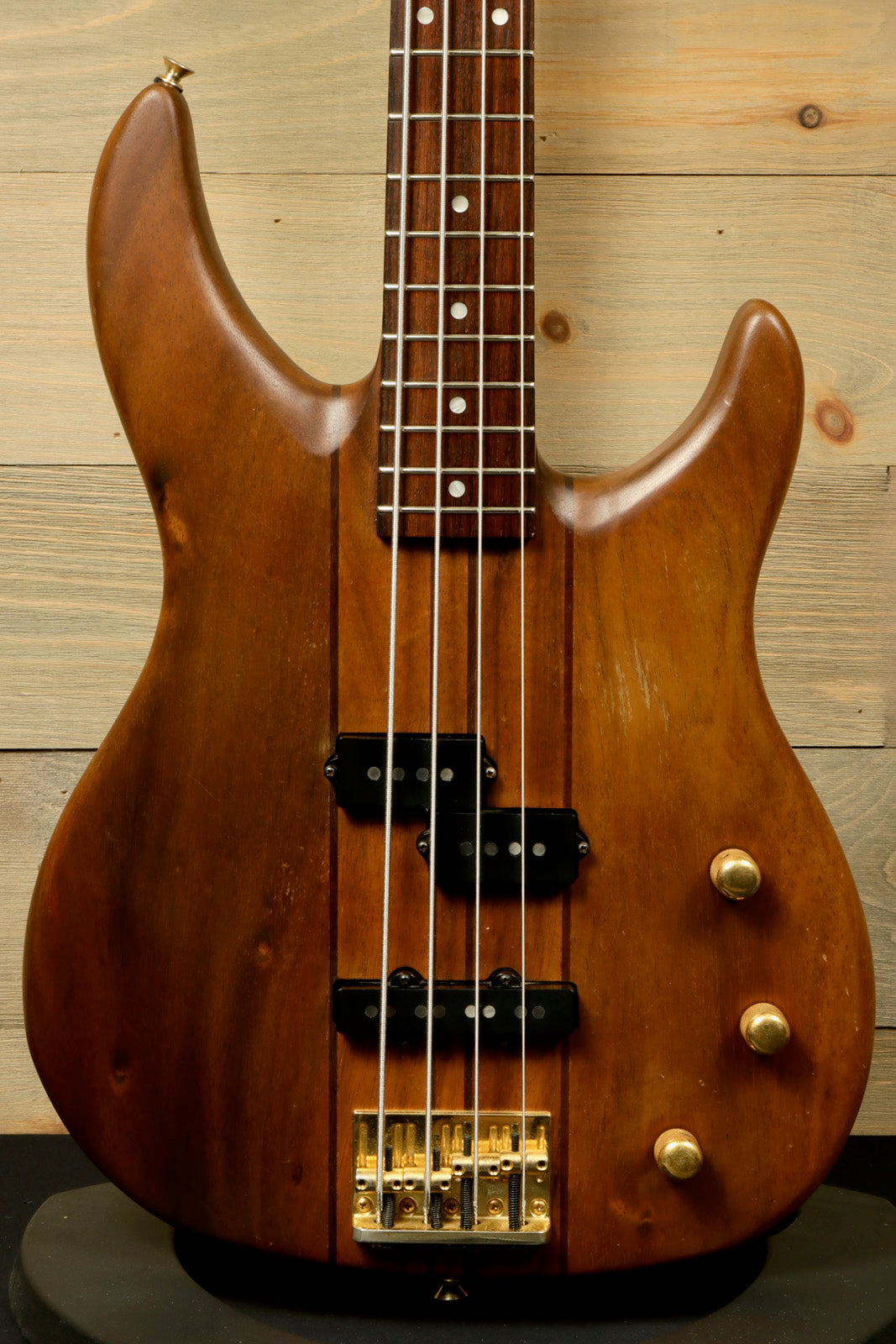
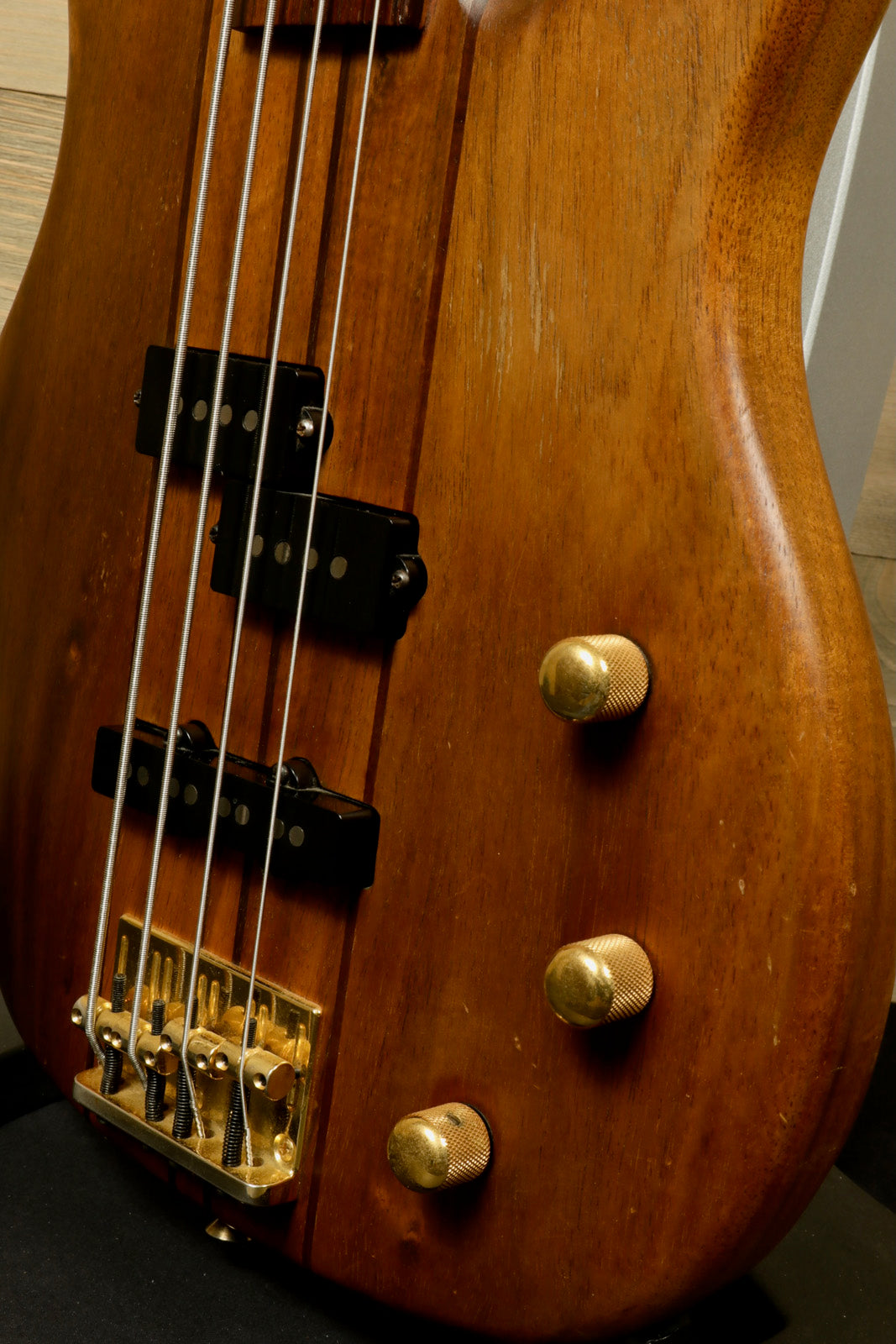
Electronics: While many later Unity models (and the Dyna-Bass) were active, the Unity Koa Passive uses a straightforward Volume-Volume-Tone (VVT) configuration. It is equipped with two split-coil, hum-canceling pickups in a P/J arrangement.
Hardware: It typically features milled-brass bridges with saddle tracks and high-ratio (22:1) die-cast tuners, often finished in gold or black.
Value Drivers
Several factors contribute to the value of the Peavey Unity Series Koa Passive Bass, especially for collectors and players seeking original models from the late 1980s and early 1990s. Below are key value drivers that can significantly impact the instrument's market price.
The Original Case: Having the original molded Peavey case from this era can increase the instrument's value by approximately $100–$150. These cases are becoming increasingly rare and difficult to find as standalone items, making them a sought-after accessory for those wishing to complete a vintage set.
Active vs. Passive: Passive Koa models are less common compared to the more prevalent active "Dyna-Bass" versions. Some bassists favor the passive model for its distinct "earthy" tone and the convenience of not having to rely on a battery, which can enhance its desirability and value among enthusiasts.
Condition of the Finish: The Koa Passive Bass typically features an oil finish, which is susceptible to developing "shiny spots" from frequent handling or darkening over time. Instruments with a well-maintained and clean finish are more likely to command a higher price, as finish condition is a major consideration for collectors and players alike.